
IBM Domino v 9.x What to do?
A customer called me last week. Their Domino server is running v9. It has been up for 15 years. The workflow still runs. Nobody touches it.
The problem? Compliance. The OS is outdated. Domino v9 is end of life. The IT manager is nervous. The C-suite wants a decision.
And someone already mentioned PowerApps.
So let me walk you through what I actually told them — because this conversation happens more often than you think.
Option 1 — Modernize. It's simpler than you believe.
HCL Domino is now at version 14.5 ("Domino 2026"). It is fully retrocompatible with v9 NSF databases, with no change required to the on-disk structure (ODS 52 → 55 is your call, not a constraint).
The migration path is brutally simple: spin up a VM, install v14.5, move the /Data directory, keep the same IP. Users notice nothing. The application runs.
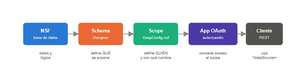
From there, you can activate Nomad Web — which lets your users access existing Notes applications from a browser, without rewriting a single line of code and without maintaining the Notes client. That alone can reduce your security exposure and cut maintenance costs significantly.
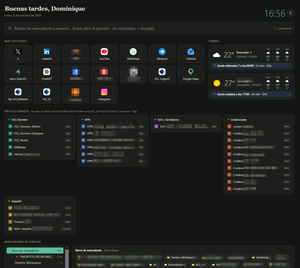
And if the classic Notes UI feels dated, Domino Restyle gives you an automatic visual modernization of your existing applications — no rewrite, no redevelopment. The same forms, views, and agents, rendered with a clean modern interface. Your users get a contemporary experience; your codebase stays untouched.
You will need to restart on a subscription license. Use Activity Logging first — it tells you exactly how many users are active and which databases actually matter to the business. Let the data justify the cost before you sign anything.
Good ROI. Modern platform. REST API integration. AI-ready infrastructure. And your institutional knowledge stays intact.
Option 2 — You've decided to leave. But you still need to be compliant today.
Sometimes the strategic decision is made. The firm hasn't invested in the platform for years. The direction is set.
That doesn't mean you abandon ship tonight.
You harden the server. You shut down unused services. You remove binaries that don't need to be there. You apply network restrictions. You document what's exposed.
It's not glamorous. But compliance is achieved, security is real, and the service keeps running while the migration project is scoped properly. C-level people deliver results by managing costs — this is a valid path, and I respect it.
Option 3 — Migration. The longest road, regardless of what the salesman says.
Here is where I'll be honest with you.
The workflow is running. The data exists. But the person who wrote it left years ago. The documentation is incomplete, or missing, or optimistic. And the new platform has to match what Domino actually does — which is more than most people realize until they try.
We can export the data. That part is easy. What is not easy is understanding what the workflow means — the business logic embedded in agents, the routing rules, the edge cases that were added in 2011 and never written down.
At Data101, we run code reviews focused on external dependencies — integrations with other systems and applications, and identifying 32-bit binaries that would break on a modern platform. It gives you a realistic picture of what a migration actually involves before you commit to anything.
Some people mention AI to document all of this. I have tried. I can testify: beyond a certain complexity, the hallucinations start. The AI tells you what it thinks the workflow does. It is convincing. It is sometimes wrong. And in a migration, wrong is expensive.
We are already hearing that AI-assisted analysis costs more than it saves in complex legacy environments. I believe it.
The real MVP of any migration project is the human project manager — the person who can read the code, talk to the remaining users, map the integrations, review the license cases, understand the new platform's capabilities, and make a decision with all the variables on the table at the same time.
Usage patterns. Code complexity. Existing integrations. Licensing implications. New platform capability gaps. Cost of opportunity. Cost of delay.
You cannot outsource that judgment. Not to a tool. Not to a vendor's pre-sales team.
My recommendation, every time:
Protect the investment and the institutional knowledge of the firm. Address the security and compliance risk. Buy yourself time to make the right decision — not the fast one.
Staying put is an option. Modernizing is another. Moving away is a long road, despite the promises.
All three are legitimate. None of them should be decided in a meeting where only one vendor was in the room.
I'm Dominique Pérarnaud, HCL Ambassador and Co Partner at Data101 SL. We help firms in exactly this situation — assessment, modernization, and honest migration analysis when the time is right.
#HCLDomino #LegacyModernization #ITStrategy #DigitalTransformation #Domino2026